 24 Hour Towing South Bend
- Home
- Emergency & RoadsideEmergency TowingLocal TowingJump StartsTire ChangesFuel DeliveryLockout Service24 Hour TowingSame Day TowingRecovery & LoadingFlatbed TowingWinch Out / Vehicle RecoveryAccident RecoveryOff-Road RecoveryAbandoned Vehicle RemovalHeavy & CommercialHeavy Duty TowingSemi Truck TowingBox Truck TowingRV & Motorhome TowingSpecialty VehiclesMotorcycle TowingClassic / Exotic Car TowingElectric Vehicle TowingOtherLong Distance TowingJunk Car RemovalAffordable TowingView All Services →
- Blog
- FAQ
- About Us
- Contact
What Actually Happens After a Crash on the Indiana Toll Road
The Indiana Toll Road runs right through Michiana, and a breakdown or crash there is a different situation than one on a city street — higher speeds, limited shoulder access, and a longer wait if you’re not sure who to call first. Here’s how it actually plays out.
Get Off the Travel Lane If You Possibly Can
If your car is drivable at all, get it as far onto the shoulder as possible — toll road shoulders are narrower than they look at highway speed, and vehicles stopped in a travel lane are the single most dangerous situation on a road like this. Hazards on, and stay buckled in your seat rather than standing outside near traffic unless you’re certain it’s safer to exit the vehicle.
Who to Call First
If anyone is hurt, the vehicle is blocking a lane, or another vehicle is involved, call 911 first — Indiana State Police patrol the toll road and need to be the ones directing traffic around a scene like this. For a simple breakdown with no injuries and no lane blockage, calling a tow company directly is usually faster than going through 911 first.
Why Toll Road Tows Work a Little Differently
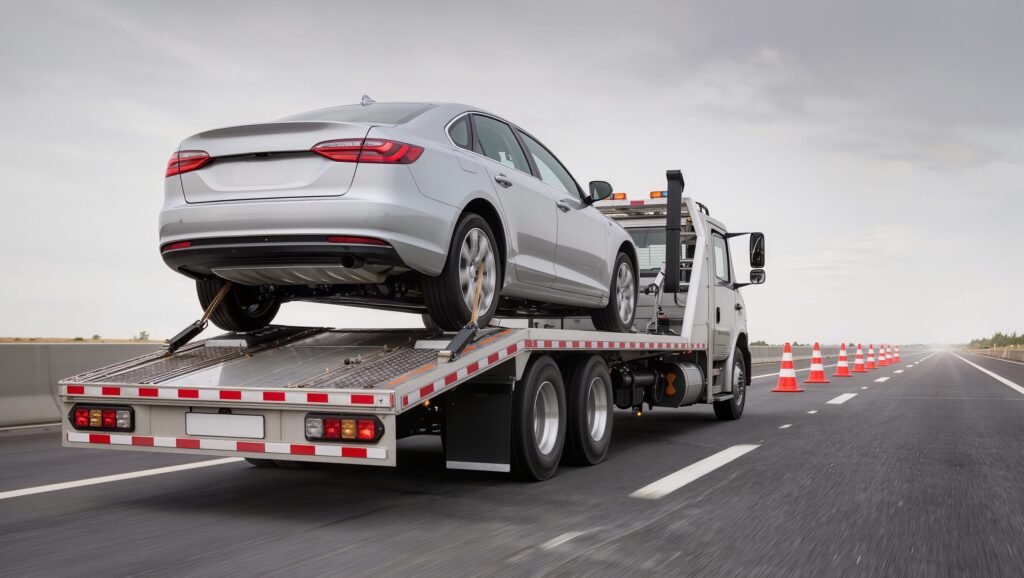
Because of the limited shoulder width and high travel speeds, a toll road tow often needs a truck positioned carefully to protect both the driver and the loading process from passing traffic — this isn’t a parking-lot job. Expect the driver to take a bit more time getting set up safely before actually loading the vehicle, which is a deliberate safety step, not a delay.
What Happens to Your Car After
Once loaded, you decide where it goes — a nearby shop, a dealership, or home, same as any other tow. If the vehicle was in an accident, your insurer will likely want photos and a police report number, so if you were able to get either at the scene, keep them handy for the shop and the adjuster.
Emergency Call Boxes and Mile Markers
The Indiana Toll Road has mile markers posted regularly along the shoulder, and knowing the nearest one is often the single fastest way to give a dispatcher your exact location, faster than trying to describe an exit or overpass from memory. If you are near a rest area or interchange, mentioning that helps too, since responders are already familiar with those exact points along the route. Keeping your toll road ticket or transponder information handy also speeds things up if the situation involves any billing or exit questions once you are safely off the road.
If You’re Not Sure How Bad the Damage Is
After any toll road incident, it is tempting to just keep driving if the car seems to still run fine, but a vehicle that was struck or sideswiped at highway speed can have damage that is not obvious from the driver’s seat — a bent wheel, a compromised tie rod, or hidden frame damage can all still let a car move under its own power while being genuinely unsafe to keep driving on. If there is any doubt at all after an incident on a high-speed road like this, having it towed for a proper inspection rather than risking the drive home is almost always the better call, even if the car seems fine at low speed in the moment.
Common Questions
Stuck on the Toll Road?
We handle toll road and highway calls safely and quickly. Contact us or call now.