 24 Hour Towing South Bend
- Home
- Emergency & RoadsideEmergency TowingLocal TowingJump StartsTire ChangesFuel DeliveryLockout Service24 Hour TowingSame Day TowingRecovery & LoadingFlatbed TowingWinch Out / Vehicle RecoveryAccident RecoveryOff-Road RecoveryAbandoned Vehicle RemovalHeavy & CommercialHeavy Duty TowingSemi Truck TowingBox Truck TowingRV & Motorhome TowingSpecialty VehiclesMotorcycle TowingClassic / Exotic Car TowingElectric Vehicle TowingOtherLong Distance TowingJunk Car RemovalAffordable TowingView All Services →
- Blog
- FAQ
- About Us
- Contact
What to Expect When You Call for a Tow Truck in South Bend
Getting stranded is stressful enough without wondering what happens next. Whether your car stalled in a parking lot off Grape Road or you’ve pulled onto the shoulder of the Bypass with your hazards on, calling for a tow truck in South Bend doesn’t have to be confusing. Here’s exactly what happens, step by step, from the moment you dial to the moment your car is safely dropped off.
What the Dispatcher Will Ask You
When you call, a dispatcher needs a few key details to send the right truck the first time. They’ll ask for your exact location — cross streets or a nearby landmark help a lot if your GPS pin isn’t precise, especially on rural stretches outside the city. They’ll also want to know your vehicle’s make, model, and roughly how big it is, since a compact sedan and a full-size pickup need different equipment. Finally, they’ll ask what’s actually wrong: won’t start, flat tire, accident, locked out, or something else. The more specific you can be about all three, the faster the right truck actually gets moving toward you instead of guessing.
How Long It Actually Takes
Response time depends mostly on how far the nearest available truck is and how many calls are already ahead of yours, but a local dispatch in South Bend typically means a truck is en route within minutes of hanging up, not hours. If you’re in a genuinely hazardous spot — stopped in a live traffic lane, on a blind curve, or on a highway shoulder at night — say so clearly when you call. Dispatchers prioritize calls where someone’s physical safety is at risk over routine breakdowns in a parking lot, and that’s exactly how it should work.
What Happens When the Truck Arrives
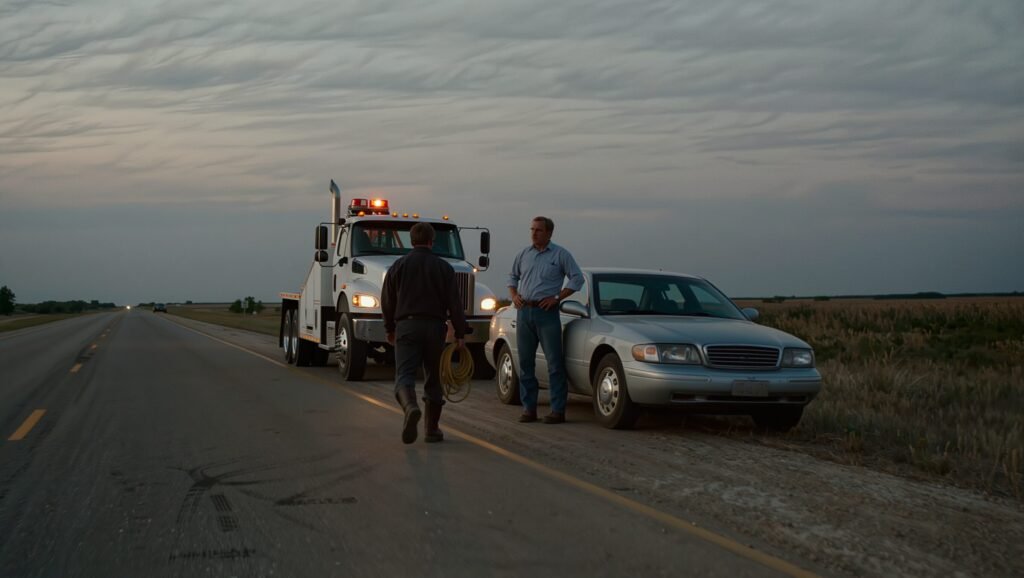
A good driver will confirm your name and vehicle before doing anything else, just to make sure they’ve got the right car and the right customer. From there, they’ll assess the safest way to handle your specific situation — that might mean a flatbed, a wheel-lift tow, or in some cases just a quick fix like a jump start, a tire change, or a lockout instead of a full tow at all. The best operators explain what they’re doing and why as they go, rather than showing up and silently hooking up cables without a word. If something about the process doesn’t make sense, it’s always fair to ask.
Where Your Car Actually Goes
You choose the destination — a repair shop, a dealership, your own driveway, or wherever makes sense for your situation. That’s your call, not the driver’s. If you don’t already have a shop in mind, a good operator can usually suggest a few options, but you’re never obligated to use a particular shop just because the tow truck that showed up happens to have a relationship with one. If your car needs to go further than a quick local trip, ask about long-distance towing specifically, since pricing and equipment can differ from a short in-town tow.
What You Should Have Ready
Before the truck arrives, have your keys, a form of ID, and a way to pay ready to go — it keeps the whole handoff quick. If you’re not planning to ride along with the tow, make sure whoever’s picking up the vehicle on the other end actually knows where it’s headed and roughly when to expect it. A few minutes of prep on your end means the whole process, start to finish, goes about as smoothly as a bad-day breakdown possibly can.
Common Questions
Stranded in South Bend Right Now?
Our drivers are ready around the clock. Call now or fill out our contact form and we’ll get a truck moving.